An open-source app called DroidDeck now lets Android phones run Steam games locally. It does not stream from a PC like Steam Link. It uses ARM64 Proton and x86 translation instead. No root access is needed, and the Android OS doesn’t have to be replaced. Users have to turn off Android’s child-process restrictions before Steam will launch. One tester got it working on a Mangmi Pocket Max after a few minutes, but a simple game called Raft still would not start. The hardware bar is high, so it won’t work on all types of Android devices. DroidDeck requires Android 9 or newer and an Adreno 730 GPU or above, such as the Adreno 8xx line. Adreno 6xx is experimental. Mali, Xclipse, PowerVR, and Adreno 710 are unsupported. Most mid-range phones and Google Pixel devices are out. Storage matters too. The Linux environment takes about 3GB, plus another 1.1GB for a desktop and emulators. That’s on top of the huge file sizes of PC games that you might want to p...
For the first time, two Philippine entries have entered the Global Top 20 of the James Dyson Award 2026. BiDaKidney and Sentinel now head to the final judging stage, where Sir James Dyson will choose the winners. Results come out on 4 November, with Php2,390,230 going to the winning inventions.
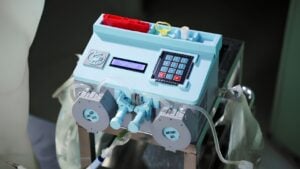
BiDaKidney
UP Diliman graduates Andrew Jacob Buensalido and Allyson Cabrestante built this low-cost, semi-automated peritoneal dialysis machine for home use.
Dialysis demand is rising. In 2024, 64,845 Filipinos received treatment, a 22 percent jump from 53,296 in 2023. Home peritoneal dialysis is tough on patients and families. It requires multiple tube exchanges daily, careful fluid monitoring, and manual record-keeping. These tasks are draining and increase contamination risk.
BiDaKidney takes over key steps while still using standard supplies. A pump pushes dialysis fluid through the tubing, weight sensors measure fluid transfer, and a dual-tube clamp controls flow to stop leaks and backflow.
Andrew’s sister, a government hospital worker, described patient conditions during dialysis, sparking the idea. Over two semesters, the pair turned sketches and 3D models into a working prototype, fine-tuning the pump, sensors, clamp, and controls through repeated tests.
Sentinel
DLSU graduate Aldrei Ong created Sentinel, which converts an ordinary concrete spacer block into a sensor. It emits measurable electrical signals when concrete breaks, allowing earlier remote detection of structural damage.
A major Metro Manila earthquake could kill about 34,000 people, injure over 100,000, and destroy more than 170,000 homes. Once the shaking ends, thousands of buildings need inspection before people can return. Visual checks and physical tests take days or longer and cost heavily. This slows reopening and hides unseen risks.
Sentinel uses self-sensing concrete. Conductive materials form electrical paths inside the block, and damage alters the signal. Embedded electrodes link the block to a compact device that compares readings and sends major changes to an online dashboard. Engineers get an early warning that a structure may need closer inspection.
Each block costs roughly Php10, or $0.15, to produce. This makes structural sensors affordable for more buildings. Blocks are already installed at the St. Margaret Mary Alacoque building of the National Shrine of the Sacred Heart for field testing.
Aldrei said structural safety should not be an afterthought once disaster strikes. He said the award gives Sentinel a platform to prove earlier, more accessible monitoring is achievable.
Michael Recinto, Senior Engineering Manager at Dyson and a Top 20 judge, called the feat a landmark for the Philippines. He said it reflects the country’s maturing innovation ecosystem and shows young Filipino inventors can compete globally.
This article, Two Filipino inventions reach top 20 of James Dyson Award 2026, was originally published at NoypiGeeks | Philippines Technology News, Reviews and How to's.
Comments
Post a Comment